
Subtotal $0.00

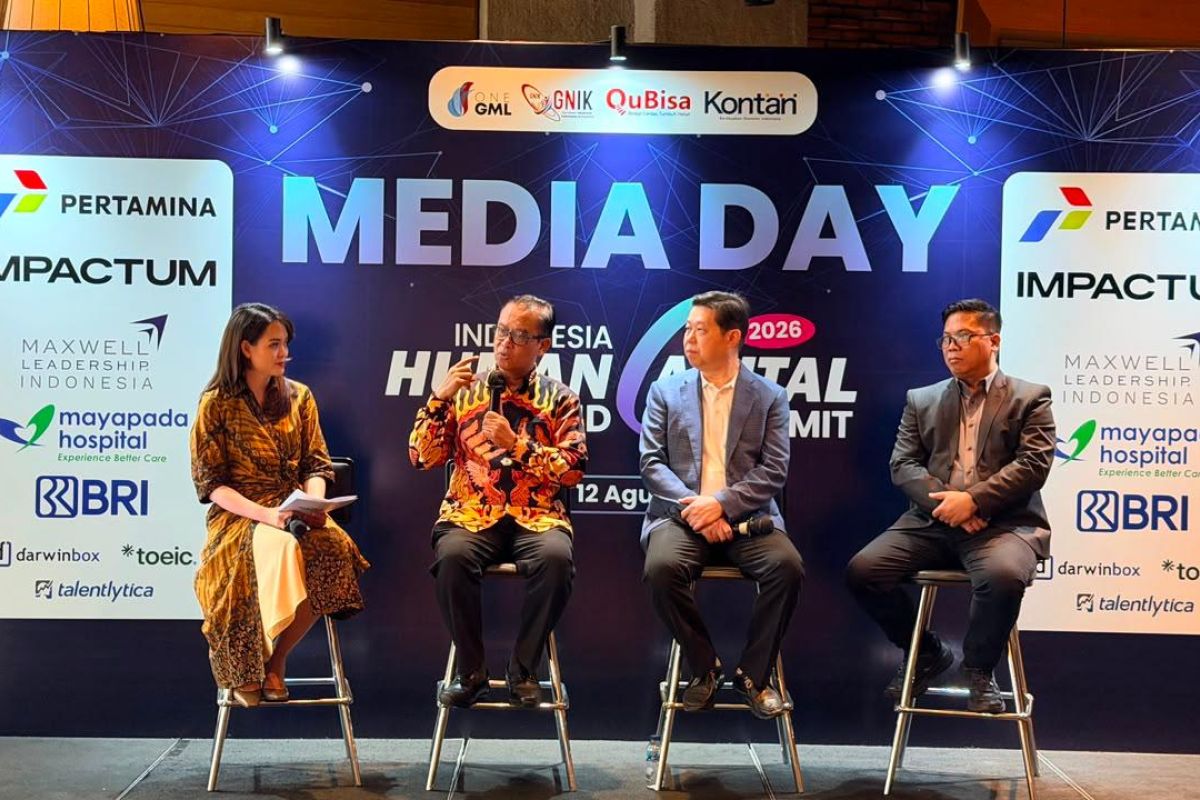
Jakarta (ANTARA) – Indonesia Human Capital and Beyond Summit (IHCBS) 2026 aims to shift the paradigm of human resource (HR) management into a driver of national productivity amidst the rapid advancement of artificial intelligence (AI) and digital transformation.
Yunus Triyonggo, Chairman of the Steering Committee GNIK, stated that Indonesian labor productivity still faces a gap compared to ASEAN countries. He noted that Indonesia’s labor productivity is approximately 10 percent below the ASEAN average.
“In comparison to Malaysia, one hour of work by our labor in Indonesia yields 13–15 US dollars. Malaysia has already reached 26–27 US dollars,” Yunus mentioned in his statement in Jakarta on Thursday.
He emphasized that this gap indicates that enhancing the quality of human resources cannot be achieved solely through conventional education and training. Strengthening competencies must be accompanied by the ability to create added value, adapt to technology, and improve productivity.
He even pointed out the considerable productivity gap between Indonesia and Japan.
IHCBS 2026 is scheduled to take place on September 15–16, 2026. The organizers are targeting around 6,000 participants, nearly double the number from the previous event.
The agenda will be linked to a blueprint for human resource development focusing on two key areas: employability and entrepreneurial capability.
“Every year we will update what has been accomplished and what the main targets are that we need to pursue,” Yunus stated.
During the previous two years, IHCBS has reportedly reached approximately 300,000 human resources in Indonesia through various competency development programs, including free AI training for over 20,000 individuals.
This year, the organizers are also preparing a book summarizing the materials and ideas that emerge during the forum, which will be compiled with the assistance of AI before being verified by experts.
IHCBS 2026 carries the theme Harnessing Human-Centric AI and Digitalization to Unlock Next-Level Productivity. This theme positions AI and digitalization not as substitutes for humans, but as tools to enhance human capacity and productivity.
Three main elements will be integrated: people, technology, and purpose. Technology must be directed towards a clear goal, namely to improve productivity and welfare, while still being supported by human resource capabilities.
This approach is deemed crucial as the workforce faces the emergence of various new technologies, including AI assistants, augmented AI, and agentic AI. Without enhanced competencies, workers risk becoming mere bystanders in technological change.
Therefore, IHCBS 2026 will expand its agenda from seven to eight tracks, introducing sessions that discuss practical skills and providing a Digitalization Zone involving around 100 solution providers in HR, AI, and digitalization.
“We want to build unity among HR managers,” he concluded.

Comments are closed